Most Recent
In Awe: Why We Close Off From Wonder
I am currently reading a book entitled The Denial of Death by Ernest Beckett. It won the Pulitzer Prize in 1974. As I’ve been quite into contemplating death for the clarity it brings to life for over a decade, I was surprised I had gone so long without knowing of the book before hearing its mention on a podcast a few weeks ago.
I immediately ordered a copy. By the time I was done with the introduction, I understood why I’d never heard its mention: the book is an unsettling, veil-lifting deconstruction of the psychological constructs that create us.
Yesterday, I encountered a passage on awe that struck me like lightning. I must have read it four times over and its implications have been echoing around my head ever since:

WONDER WANDER 2021 - Info and Application Are Now Live!
November 4th to 8th 2021, I'm hosting WONDER WANDER 2021 — a five day, four night gathering of curious, creative, and adventurous people to collectively wonder and wander among one of the most surreal, philosophical landscapes on Planet Earth.
We'll be staying in a big ole’ cabin among the red rocks just outside of Kanab, Utah, but a drive away from nine US National Parks.
It's only $300 to attend.
And it's going to be legendary.
Join us!

15 Books That Changed My Life
Books did not just change my life, they saved it. Not in an “I would have died without them” way, but in a way even more important to a temporary, living, breathing being: I can honestly say I have lived because of books.
Below are the fifteen books that have most changed my life thus far. They are listed in the order of when I read them because, in my experience, reading is akin to waking up. These books were stepping stones on my way to doing so. Looking over the list, I realize every one of them was not just a profound read, but helped to solve a problem or question I was wrestling with at the time. In a way, they plot my growth and direction across time, which says much about their power, effect, and influence.

The Question of Yes or No
Yes or no — which is best? It’s a question that appears to need more context, but actually doesn’t.
Rather, the question of yes or no is about our unconscious tendency to lean towards saying “yes” or “no” when opportunity presents itself in life.
If you really think about it, even a slight preference towards saying “yes” or “no” to the unfathomable amount of potentials we encounter throughout a lifetime is probably hard to overstate. For this reason, many have argued for conscious consideration of our often unconscious answer.
The kicker is everyone seems to advocate for a different answer.
Some are all about saying “yes.” Others are all about saying “no.” There are books and movies about the power of saying “yes” and writers who say “no” to everything except writing books and movies. A third school of thought also exists in the space between yes and no, interestingly, without the inertia of maybe.
The further you get into it, the more complicated and complex the question of yes or no becomes. It is, however, worth a dive into the complexity because the yes or no we unconsciously lean towards has tremendous influence on the decisions that shape our lives.

The Art of Bathroom Reading
In life, there are rare things that are both easy and good. One of those things is reading while you poop — a practice often less literally referred to as “bathroom reading.”
Bathroom reading rocks because it is such an easy practice to develop. You don’t have to rearrange your priorities or work to make it a habit or anything. All you have to do is place a book within sitting reach of the toilet.
You see, you are a human being, and as long as your innards continue to function, you are regularly going to have to poop. When that special feeling arises, you make your way to your toilet, sit down — and hey — there’s that book you left here to read when this happens! You crack the book open and read while your autonomic functions take care of business.

7 Reasons to Make a Needlestack
This January, I launched my version of the Needlestack, a new type of page for the internet.
The idea of the Needlestack is simple: if everyone with a blog or website had a dedicated page of links to what they personally consider the best pages on the entire internet, and we had a directory linking those pages together, we could separate “the needles from the haystack” of the internet and make the internet browsable by best.
The challenge for the Needlestack now is to find its audacious first adopters willing to make their own without much social proof. If my Needlestack is the flint, those first to make their own Needlestack are the sparks needed for this new idea to catch and spread (shout out to CEDAR for being the first to make the leap!).
Fortunately, the Needlestack has compelling incentives built into the idea to get and keep it growing. Rather than leave them to intuition, I will briefly outline each below.

2020 In Review and A Glance Ahead
With the turn of each year, I find great benefit and long-term orientation in reflecting on the one past and envisioning the one to come.
While a new year is an arbitrarily chosen point in Earth’s lap around the sun, it is a regular mark of transition. And as transitions tend to cause us to pause and reflect, a new year seems an ideal reminder to zoom out of the day to day and look at the big picture of our lives.
That said, I don’t believe in resolutions or overly focusing on specific future targets. Rather, I liken the process to “stopping for a few minutes to study the map, check that we’re heading in the right direction, and boldly continue with the journey of life.”
Introducing the Needlestack
The year is 2021 and we are more than two decades into mass adoption of the world wide web. We have devised brilliant ways to surf the hundreds of billions of pages that compose the internet by keyword, category, and recentness. Have you ever wondered, though, why are we unable to browse by best?
No search engine or social media site has yet to truly solve the problem of prioritizing quality. Not Google, not Facebook, not Tumblr, not Pinterest, not any other site.

15 Ways to Surf Time
1. If you think about eternity and the time of your life within it you can find freedom in sensing how little what you do actually matters.
2. If you envision time as sand passing through your hands you can relish in the texture and touch of this moment.
3. If you seek novel experiences you can lengthen your experience of time. Novelty creates memory. The more memories you have across a period of time, the longer that time will feel.
CEDAR Weekly Podcast: The Philosophies of Death and Wonder with Ethan Maurice
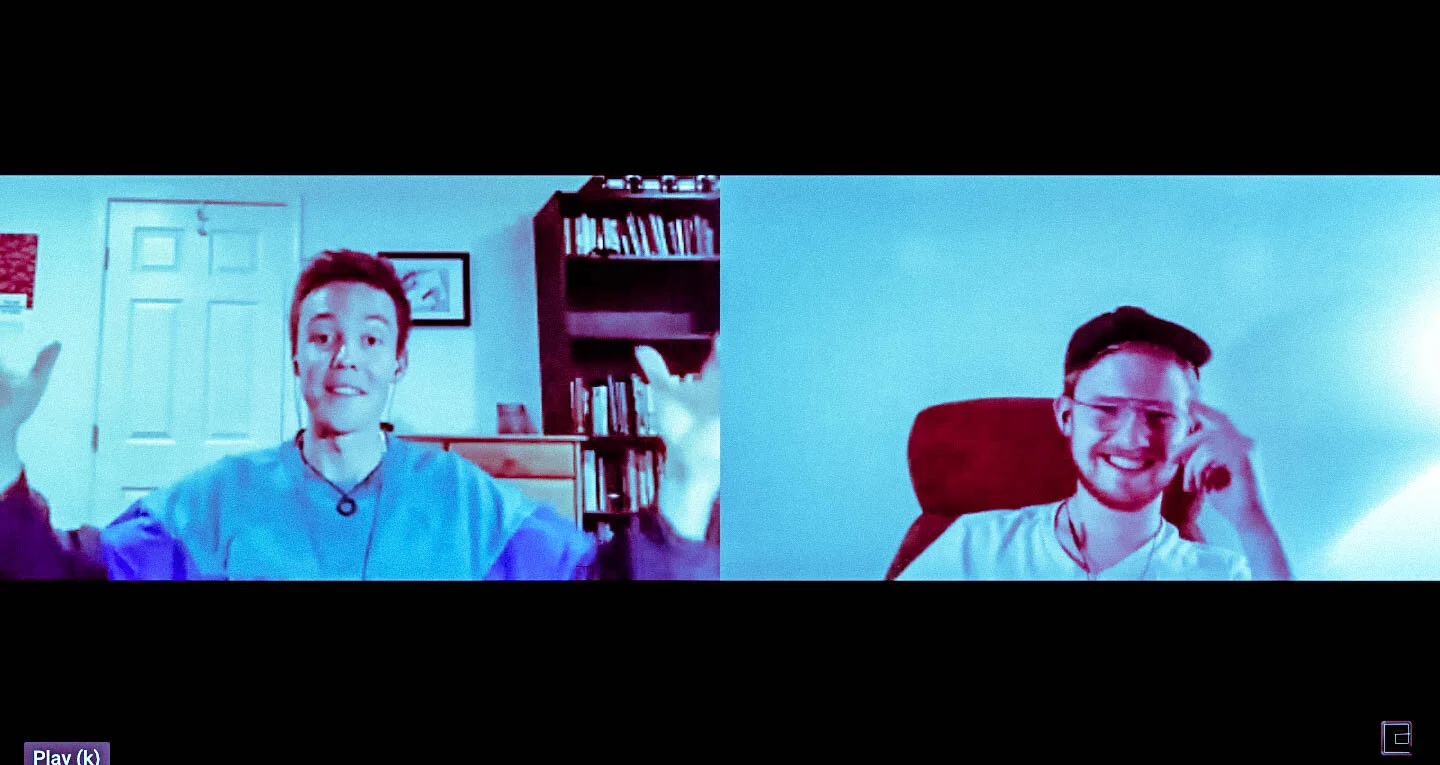
I was interviewed last week on the CEDAR Weekly Podcast by musician and artist-lifting host JJ Shafe. Our wide ranging discussion included subjects from death and long walks to the sense of wonder and the supreme value of commonplace books. It was a grand time.

Joseph Campbell's Reading List
Joseph Campbell is one of my greatest heroes. His words ring with deep truth in me and my life has been greatly inspired by his.
What so inspires me about Joe is not that he uncovered and popularized the psychologically powerful, universally mythologized cycle of “the hero’s journey,” but that he did so by walking the hero path himself. His ideas are the foundation upon which our modern myths, movies like Star Wars and The Matrix, were deliberately built. His posthumously released six-part PBS interview series with Bill Moyers, The Power of Myth, remains “one of the most popular series in the history of public television.” The interviews from that series were filled with such deep insight and wisdom that their transcripts were simply printed into one of my all-time favorite books.

On Viewing the World Through a Lens
We are each viewing the world through a lens. This lens is difficult to notice, though, because it doesn’t exist.
Rather, this lens is a collective conception of influential intangibles: culture, beliefs, values, awareness, and all sorts of other ingredients we each picked up in our past. Together, these ingredients amount to a figurative lens — a lens that sits between the world external to ourselves and our internal experience of it — focusing our awareness on particular details.
Through books, writers with minds and prose superior to my own brought this lens through which we are each viewing the world to my attention. Had I not copied a few of their particularly profound passages into my Commonplace Book, I probably wouldn’t have noticed it:

Five Years Ago I Started Wondering Wandering and Writing
The following is an excerpt from the August 2020 edition of my monthly Late Night Letters. Usually written the last night of each month, I sent this one out a few nights late to coincide with the five year anniversary of this blog. Reading it again recently, I realized it speaks well to the why of the past, present, and future of this project — so I thought to publish it in the blog itself.

The Symbols I Consciously Include in My Life
This is a follow up to The Unsung Power of Symbols, in which I promised a list of the symbols I currently, consciously use in my own life. The intent is simply to provide some concrete examples of symbols to inspire ideas and act as a jumping-off point into the search for your own.
Below are six of my symbols, with a little what and why about each:

The Unsung Power of Symbols (& How to Use Them)
Symbols matter more than you think.
In a column titled, The Story of a Thing, a New York Times Reporter asked a few dozens famous creatives, “what’s your most prized possession?” While the answers varied widely, from a factory table where women sewed flowers onto hats in the 1960s, to a picture of Harriet Tubman, to a fifteen-year-old tea bag, each object was not prized for its usefulness or economic value, but for its meaning. Everyone’s most prized possession was a symbol — an object highly charged with meaning.
Symbols are a curious, human thing. How is it that a fifteen-year-old tea bag could be someone’s most prized possession?

Sand Art
You ever see those Buddhist monks
who spend months placing grains of sand
into those intricate mandala art pieces?
Once finished their masterpiece is
ceremonially shown to all who wish to see.
Everyone attempts to preserve
to photograph or at least remember
what will soon no longer be.
Then the monks sweep their masterpiece
into a pile and scoop it into a bag
to be poured into a nearby river.

When Objectivity Fails to Keep Us Human
My friend is a true artist. A feeler with strong intuition, she lives in deep connection with the desert she calls home.
Her walks through the desert are her daily source of renewal. The smell of creosote in rare desert rains moves her more than anyone is moved by a smell. She feels an energy between all things that I could once only logically intuit.
I am often inspired by her connection to everything. Our time together has connected me to all these gifts, strengthening my connection with the natural world. Recently, however, she told me something I simply have not been able to believe or connect with: red-tailed hawks are messengers.

2019 In Review
On my end, 2019 was a year of re-centering, transition, and adventure.
Reeling from the realizations of a ten-day meditation retreat at the end of 2018, I spent the beginning of the year splitting rent and a bedroom with my brother in Flagstaff, AZ attempting to ensure my values—not some image I have of myself—were at the helm of my life. Then, called by curiosity, excitement, and what I could confidently call “inner-pull,” I began again: ventured about to Nepal and Cambodia, built the backbone of a book, and made a most life-directing decision to attend flight school.
At the end of three of the past four years (2015, 2016, and 2018), I’ve taken the time to step back, reflect, and attempt to see the big picture. While a year is just a human construct pinned to an arbitrarily chosen point in a lap of the Earth around the sun, that point makes us want to pause and reflect. I believe that an urge worth using.

Refresh Yourself: The Daily Art of Pressing Your Reset Button
What follows is an introduction to hard work not as an act of martyrdom, but a self-aware balancing act between pressing on and renewing our ability to do so. A way of consciously culling the best out of ourselves rather than mindlessly demanding it.
First we’ll consider when to stick with something and when to step away to “press the reset button.” Then we’ll go over a dozen ways to press it.
Let’s get into it.

The Endless Dance
I was climbing a mountain
a desert island in Phoenix.
It had just rained three days straight
and the unprecedented rain left
everything an unprecedented clear.