Most Recent

2016 in Review
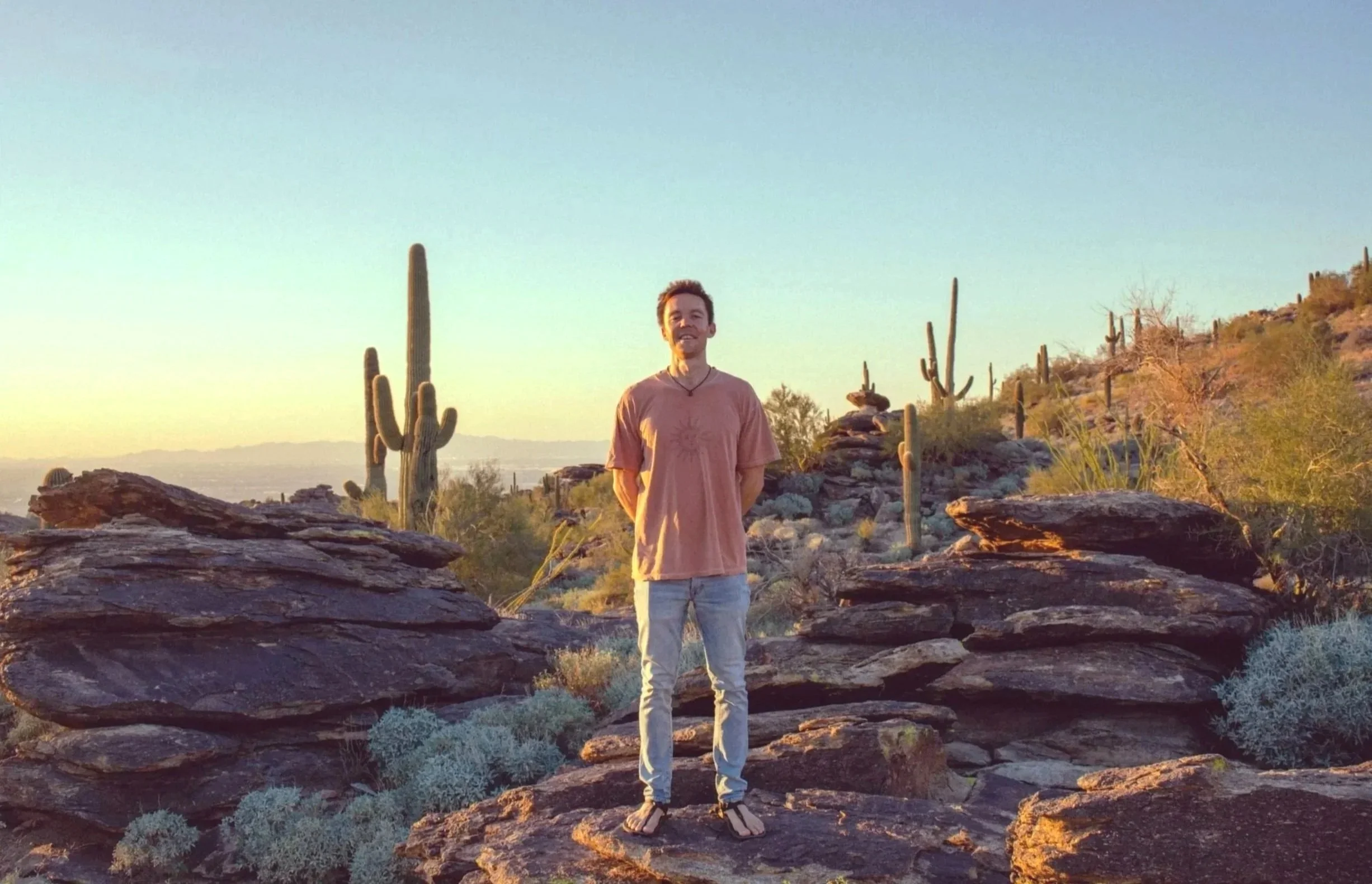
This is my second annual review, a sort of yearly glance at the map to better understand where I've been and where I'm going. Looking back at last year's review, it seems I hit seven of the eleven goals I set for 2016, which I'm quite happy about. If I'd fulfilled all of them, I think that would mean the bar was set too low.
This post is a bit more of a plot summary of my life, rather than lessons or ideas taken from it that I usually share. However, I tend to enjoy a bit of background information on who writes the things I read. If you do too, read on.
In Memory of an Astronaut
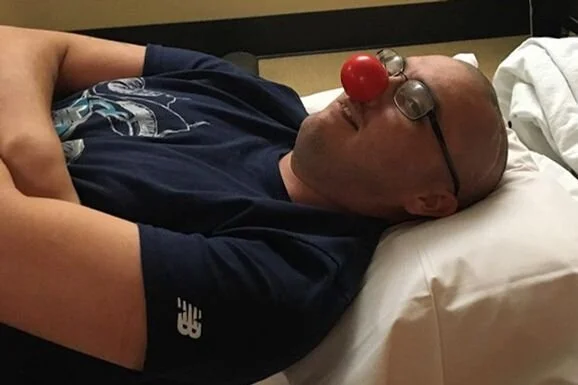
I met Steve “Boomer” Santistevan because, like him, my life was saved by the staff of Phoenix Children's Hospital. I had an infection of the fluid surrounding my brain and spine, causing a brain-damaging stroke. Boomer had a brain tumor that was supposed to be the end of him. Yet, there we were—still breathing and more alive than ever before. We were the embodiment of the best possible outcomes of our afflictions. I woke up from a coma and made a full recovery. Boomer defied death, miraculously navigating the narrowest path of survival through dozens of brain surgeries.
Hanging onto the fringes of life and peering over the edge changed us. For us both, life was no longer a struggle, but a gift. We knew there was no such thing as the "daily grind." Every day was a miracle. And anyone who might disagree just didn't understand.
We also found purpose in giving back to the non-profit children's hospital that saved our lives. I chose to ride a bicycle across the United States as a fundraiser. Boomer ran marathons, walked, and participated yearly in the Ignite Hope Candlelight Walk at the hospital, a moving experience I regret not sharing with him.

With Each Stroke of the Paddle
We all have goals, ambitions, and dreams we'd like to reach in life. We think about them often. We imagine ourselves as masters of this or creators of that. But how often are we just dreaming instead of doing?
I was paddling around in a kayak the other day and realized kayaking is the perfect metaphor for our ambitions in life. In a kayak, paddling is everything. If you want to go somewhere, you have to paddle to get there. Without consistent strokes of the paddle in the direction you want to go, you're merely drifting at the mercy of your environment. You'll never get to where you intend to.
In a kayak, wishful thoughts of your destination might keep you going, but will not get you any closer. The stroke of the paddle is all that counts. Life works the same way. If you know you want to go in a certain direction, master a skill, or pursue anything, it takes consistent, deliberate action.
We're Not Beginning at the Beginning
We began in the middle of the story. Though our beginning may seem like the beginning, it wasn't. We tend to think with storyboards that span the length of our lives—birth to death, beginning to end. Such a storyboard is a bit small, though. Much happened before we arrived and much will happen after our departure.
In regarding the start of our lives as the beginning of all that composes them, we overlook what has come before us and tend to forget that what came before is—get this—almost entirely responsible for our reality today.
It's not just inventions and material advancements of the past that built the physical reality we were born into. It's all the ideas conceived in the past, from democracy to evolution to economics. Logic itself was birthed by the Greeks and handed down through time to us. The language we were taught and the words contained within it allow us to express ourselves but also limit our self-expression to the words those of the past made available to us. Human behavior, expectations, our interpretation of reality... almost everything we know and do stems from those who came before us.

In the History of Humanity Traveling Has Never Been So Easy
I'm jet-lagged and have to run to catch a bus across the south island of New Zealand soon, but I want to pin down a beautiful thought that's been bouncing around my head the past couple days.
In the history of humanity, traveling has never been so damn easy. Think about it: you could be almost anywhere on the face of the earth in a matter of a day or two. This weekend, you could snorkel the Great Barrier Reef, walk the Great Wall of China, or drink a Guinness in Ireland.
This might seem normal to us, as we were born with this privilege, but looking from a larger perspective, it couldn't be further from usual. For hundreds of thousands of years, we humans could only travel as fast as we could walk. Eventually, we figured out how to tame and ride animals that were faster than us, which sped things up a bit. We built ships, and bold explorers crossed uncharted oceans with wind power. However, nothing comes remotely close to the ability to travel we have today.

An Exercise in Overwhelming Possibility
This is not an article, it's an experiment. It takes about ten minutes. It will make you think about how narrow-minded we all normally are and will leave you with a profound, overwhelming sense of possibility.
Interested? Grab headphones, a pen, and a blank piece of paper. Not grabbing said ingredients? Don't bother reading on.
You Have To Find Your Own Pot of Gold
Nobody can hand you your pot of gold. There is no magic pill, no trump card we can play in life that wins every time.
Every once in a while, I pick up on a certain dissatisfaction in readers, readers of this site and other sites that I read. They're dissatisfied because they want the answer, not a way to go about finding it. In their search, they encounter ideas, strategies, and guidance, but all they want is the end product. The solution to their predicament without the work. No matter where they search, nobody seems to be offering it.
On such a quest we may look to carbon copy others' successes, only to find that what worked for someone else doesn't work for us. Unlike Steve Jobs, it's no longer the 1970's, and we're not friends with a Steve Wozniak who's building an electronic device that could revolutionize the world. Unlike Tim Ferriss, we don't have a bestselling author like Jack Canfield to advise us in writing and promoting our first book. I've been told that I'm lucky to have almost died at sixteen years old because it gave me such a powerful story for my cross-country bicycling fundraiser.

Leaky Bucket Economics
People often ask me how I afford to travel so much. Where do I find the time? How do I make enough money?
It's all actually quite simple. I think anyone could replicate what I do. I did my best to explain in "GO." my guide to cheap, unconventional travel, but I want to elaborate on one of the most important, yet often overlooked concepts I live by that allow such freedom. I call it leaky bucket economics.
I literally think of my personal finances as a leaky bucket. Each one of us has a bucket. The money we earn flows into our bucket. The money we spend leaks out. If someone makes $30,000 in a year and is able to save $20,000, they've got one well-patched bucket. In contrast, if someone makes $100,000 a year and spends it all, their bucket has no bottom.
The goal of leaky bucket economics is simple: to patch our inevitably leaky buckets as best as we can. Without money flowing in, we want our buckets to be able to last months, years even, before running empty. Think of it as a sort of financial miles per gallon. On our journey through life, we should strive for a personal finance system with the efficiency of a Prius, not a F-350 Super Duty.
A Letter from Hunter S. Thompson on Choice and Meaning
At the age of 20, Hunter S. Thompson wrote a friend in response to a request for life advice. While rejecting the idea that one can tell another specifically what to do with their life, Thompson's general guidelines for deciding how to answer such a monumental question for ourselves are remarkably profound and useful.
The Time I Was Caught Sleeping In My Car and Some Thoughts on Cultural Pressure
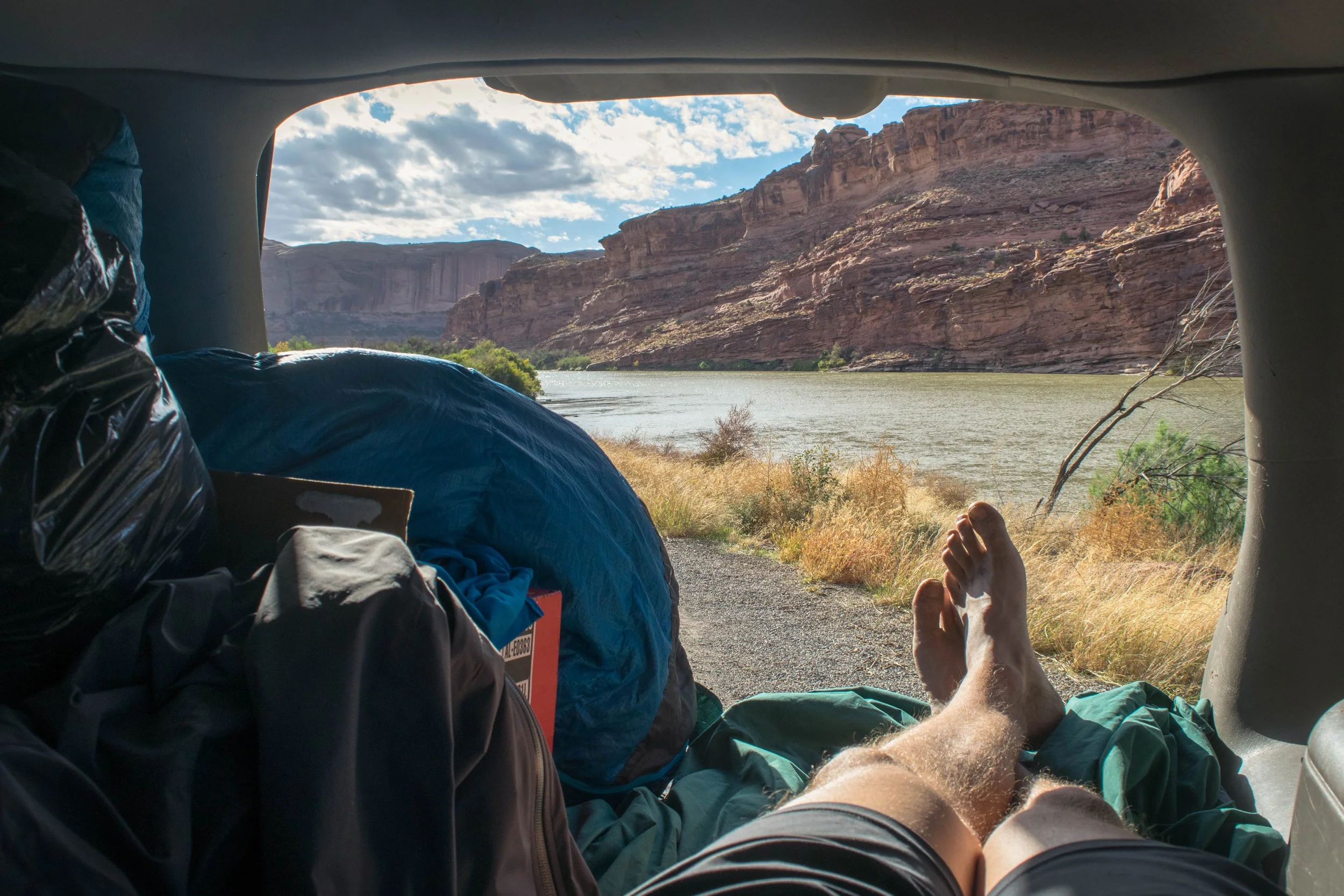
It's nighttime in an upper-middle class suburb near downtown Denver, Colorado. Streetlights cast a warm light across the neighborhood revealing the faint orange of fall leaves on the trees and road. Quaint old brick homes built right up against each other line the streets with cars of the affluent parked bumper to bumper outside them.
Amidst these luxury vehicles, I'm sitting in the passenger seat of my cheap, old Durango, gathering up the ingredients to make a peanut butter and jelly sandwich with my headlamp. It turns out I left my backpacking spork in the back, which is essential for spreading the peanut butter and jelly, so I open the passenger side door to retrieve it. Opening the door turns on the interior lights of the car, illuminating my bed and many possessions piled up in the back.
With impeccable timing, an older, upper-middle class couple walks by just as I light up my car's interior, exposing my neighborly camping intentions just as I pop out of the car to face them.

Seeing What's Common from an Uncommon Angle
Every once in a while, when walking around the incredible lodge I live and work in, my eyes, a window, and one of the surrounding mountains perfectly line up. As I walk towards the window, the angle of my view through it rises, and my view of the mountain climbs higher and higher and higher... and HIGHER???
By the time the top of the mountain is in view, I'm shocked. I'm reminded of how majestic, how huge these surrounding peaks are. Every time this alignment of eyes, window, and mountain occurs, I stop and stare in amazement for a second.
The mountains surrounding Silver Gate, Montana are multiple thousands of feet higher than the town on the valley floor. They climb so high, so fast, and from so close that their presence just looms, towering over the valley. I was constantly moved by these mountains when I first arrived at the beginning of the summer, but over time, I got used to them. In their constant presence, I looked up less and less to appreciate their grandeur.
Embracing Possibility and an Epic Trek Through the Alaskan Wilderness
The above video is a National Geographic Live! Presentation by Andrew Skurka, a man who left the trail behind to traverse 4,569 miles of Alaskan Wilderness. It's riveting. It's powerful. It's one of the most inspiring talks I've ever seen. I share it not just in the hopes that it moves you, but to illustrate the extreme degree of possibility that comes with being alive.

“How Did I Get Here?” Moments
An old Toyota pickup that was roughly converted into a dump truck cruised a Hawaiian highway with dense jungle on both sides. In the back of the dump truck was a giant pile of bananas. Atop that pile of bananas were three guys. I was one of them.
The absurdity of the situation baffled me as I sat, precariously perched atop a pile of fruit at such high speeds. I looked at my buddy, Alex, with near disbelief. “Dude!” I yelled through the wind, “Do you realize we’re in Hawaii riding down the highway in the back of a dump truck full of bananas right now?”
We laughed at the ridiculousness of the situation as we attempted to juggle bananas, throwing them forward into the 65mph blast of wind that would push them back towards you to catch as you tossed the next. Chuckling, I incredulously wondered aloud, “How did I get here?”

The Beauty and Benefits of Simplicity
This is a guest post by Patricia Maurice. An accomplished professor, mother, and a voracious student of life.
There’s nothing like a solo hike up the side of a rugged mountain peak to organize one’s thoughts and create a little time for reminiscing. But, it wasn’t until I got back to camp this evening and raced to warm a bowl of soup in the path of a thunderstorm that clarity finally struck me… at 55 years old, I am happier than I’ve ever been in my life.
This journey towards happiness has not been steady or linear by any means. Mine has been a life of long periods of chaos punctuated by sudden epiphanies that have arrived like thunderbolts from out of the blue. I could, and perhaps will write about several of them. But, surely, one of the most important occurred a little over a decade ago. In my mid-40s, life had become a seemingly endless, exhausting ping-pong match of career and family. I wasn’t sleeping, was hardly eating… and it always seemed like the harder I worked, the more behind I fell.
The Most Beautiful Sunrise of My Life
A certain energy was in the air. It was one of those rare mornings when you wake up conscious of your surroundings and what you're about to do because it's the day.
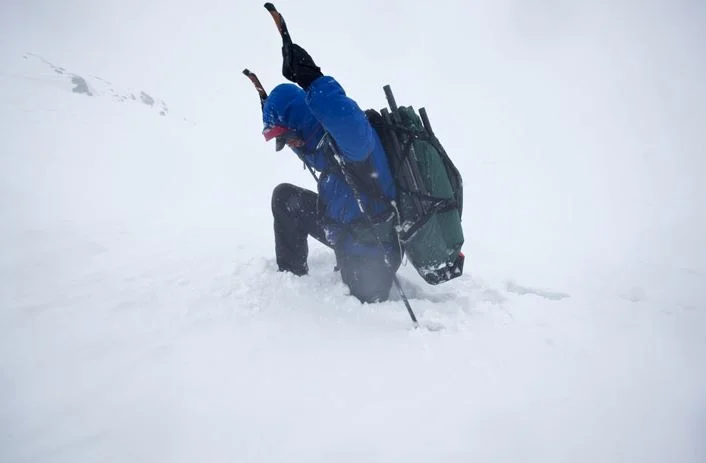
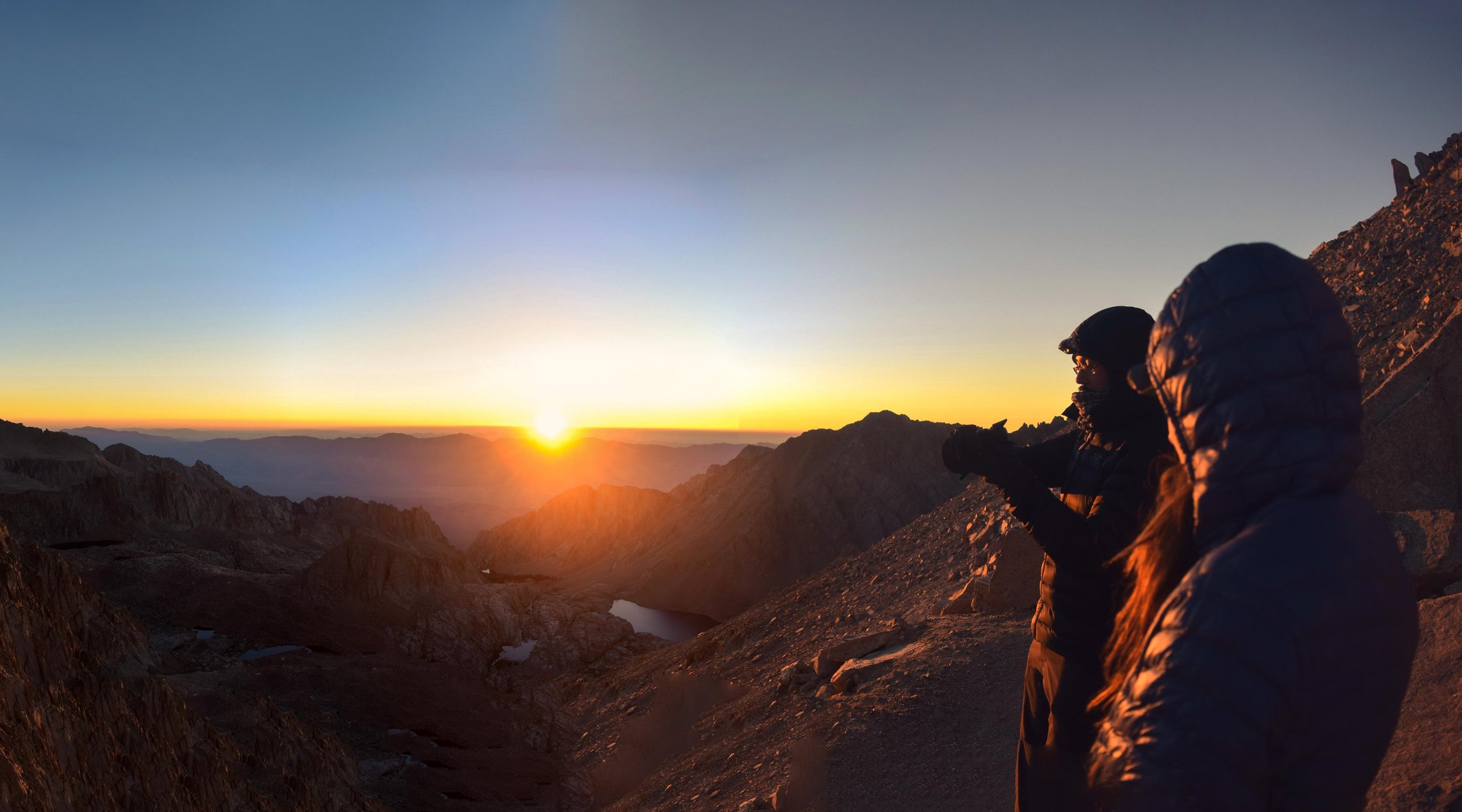
My sister and I rolled up our sleeping bags, broke down the tent, and packed everything with a hushed fever and deliberateness. After failing to do so almost exactly two years previous due to an unprecedented August snowstorm, we once again found ourselves at Guitar Lake, preparing to make our second attempt at the 14,505ft Mount Whitney, the tallest mountain in the continental United States.
It was 2:15am. Four of us stood around trying to maintain a degree of stoicism toward the effort that lay ahead, distracted and awed by the stars above. Well above the treeline, our surroundings consisted of rock and dirt, giving us an unobstructed view of the Milky Way that spanned across the entire night sky. The air felt like one would imagine space to feel if it were hospitable—cold, crisp, still. My hands were crammed into a pair of used, crusty wool socks for warmth. Unable to use my thumbs, I awkwardly attempted uncomfortable grip variations of my trekking poles.

Viktor Frankl on Idealism and Why You Should Aim Higher Than You Can Reach
Holocaust survivor, legendary psychiatrist, and author of the life-quaking book Man's Search For Meaning, Viktor Frankl's work has impacted (and continues to impact) millions of people.
In this clip, specifically his plane landing analogy, he illustrates why one must aim beyond their potential in order to reach it.
Handstands and Discarding Limiting Beliefs
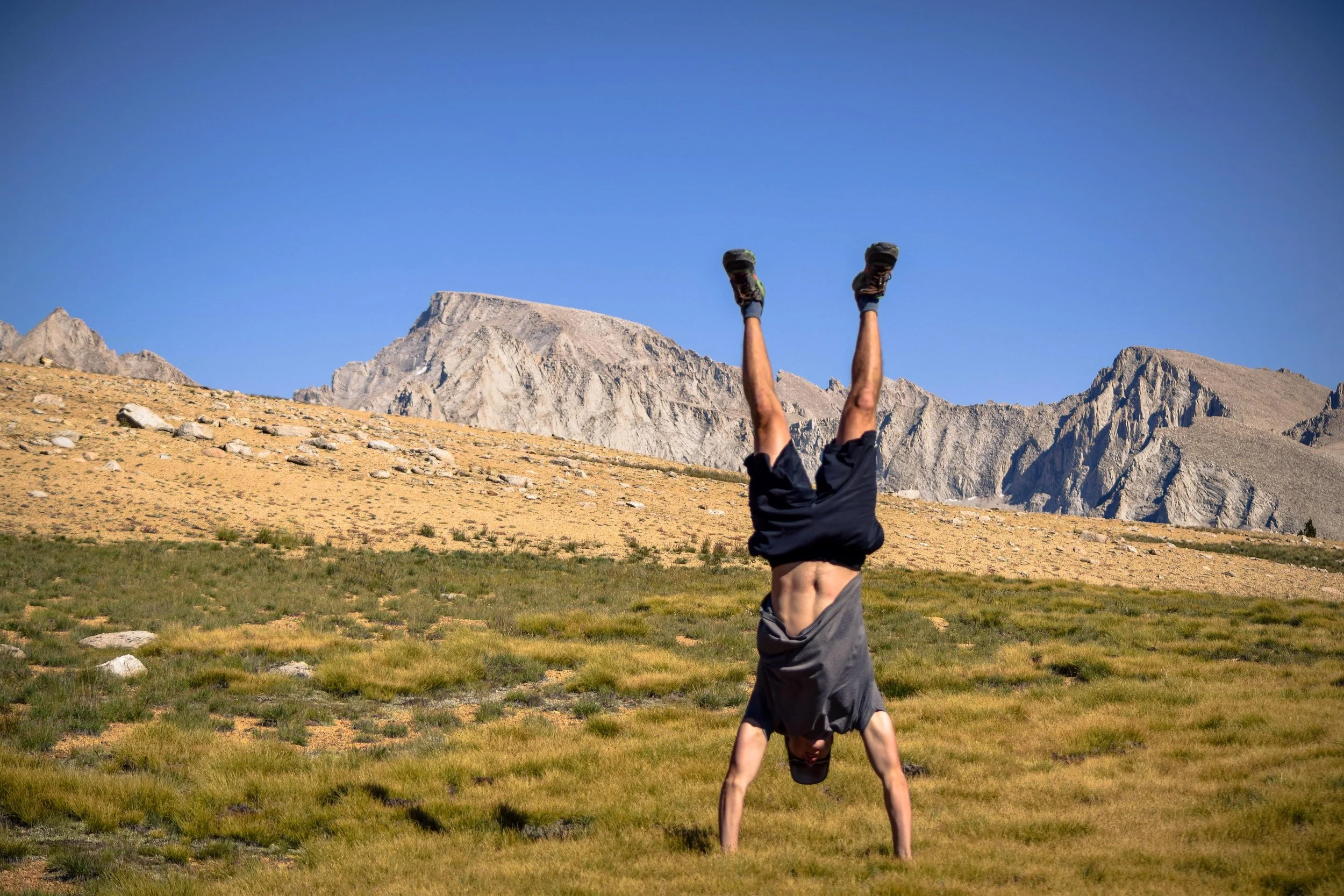
Not long ago, I couldn't even entertain the possibility of doing a handstand. Now, I can hold one for five or six seconds. At a glance, that's really not all that impressive. However, what happened between these two points in time is quite worthy of mention.
Way back when I was a little kid at recess, a bunch of my classmates were doing handstands, cartwheels, and other gymnastic type stuff. One week, it was just what everybody was doing. I'd never really tried or learned anything of a gymnastic nature and, unsurprisingly, I sucked at it. On the other hand, I played a lot of sports at home, and on the elementary school playground I always did quite well. I concluded that I was athletic, but not acrobatic.
For the next fifteen years or so, the belief that I was “athletic, but not acrobatic” shaped my life. I practiced and played all sorts of sports, believing that I was athletic, I got pretty good at many of them. I sought out athletic opportunities, but avoided acrobatic ones—I knew I was bad at those. Many years later, I still am.
10 Rules for Insanely Cheap Travel
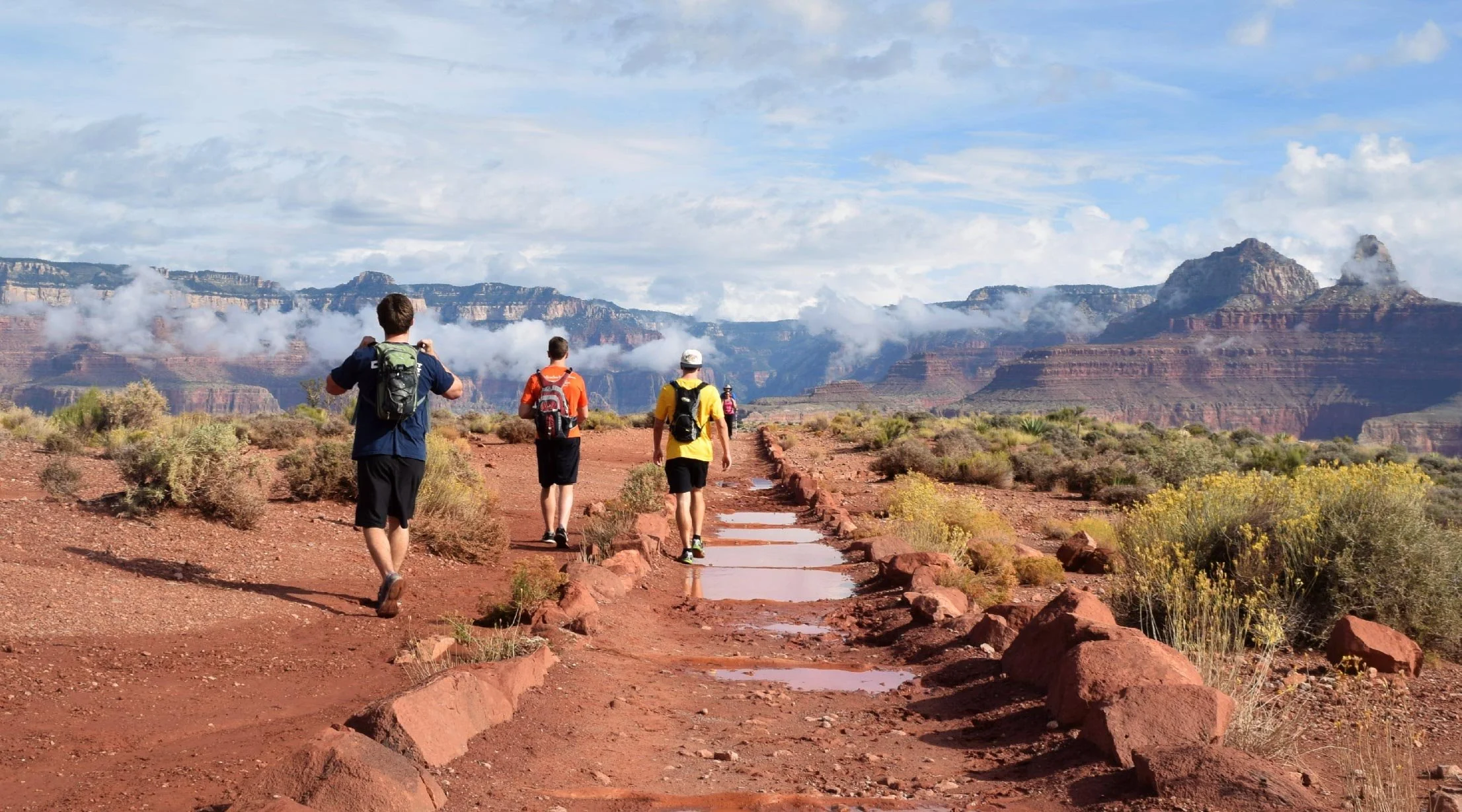
I've spent a majority of the past two years traveling and honed some serious ultra-cheap traveling skills. I've bicycled across the United States, lived like a local in Mexico, worked as a deckhand on a cruise ship, and had many other adventures on a shoestring budget.
I am not rich, nor do I have passive income. I just picked up skills, strategies, and a host of resources along the way that make traveling insanely cheap. I suppose you could call me a “travel hacker.” A quick example: I spent two and a half months on the Big Island of Hawaii last summer for $669 (including airfare) without budgeting or “penny pinching.”
Here are 10 rules I attempt to follow that produce some insanely inexpensive trips:
Why I Started The Living Theory
I tried to focus as the professor droned on about enzyme structures in biochemistry class, but I constantly drifted towards it. It consumed my thoughts as I ran. It filled the moments before I fell asleep and the dreams afterwards. I couldn't stop thinking about all I had to say.
I couldn't stop thinking about this website.
A string of events led to this obsession. It started with a mosquito bite. That bite led to an infection of the fluid surrounding my brain and spine, causing it to swell. The pressure caused seizures and a brain-damaging stroke, which began a multi-year struggle of rehab and dedication towards returning to the “old me.” Around the time two years had passed, I began to wonder if I'd made it back to normal. I thought about that a lot. One day, I asked myself the right question, which stopped the wondering altogether—“Why stop at normal?”
What to Discuss With a Work Trade Host Before You Go
Work trade organizations like WWOOF and HelpX make experiencing anywhere around the globe remarkably affordable. In exchange for part-time work, hosts will provide you with food and a place to stay, leaving you with next to no expenses virtually anywhere on earth!
To give you an idea of how cheap we're talking, I spent two and a half months WWOOFing in Hawaii for $669 (including the plane ticket). I worked 20 hours per week, got my own cabin, and our hosts took us around the island quite frequently on days off. However, I met other WWOOFers that summer who picked weeds for 30 hours a week and in exchange for nothing more than a place to pitch a tent.
It's absolutely vital to go over the specifics of your work trade arrangement with your hosts before you go. Know exactly what to expect before you commit to insure you end up in a situation you love – not loathe.