Most Recent

Now is the Perfect Time to Apply for An Epic Summer Job on CoolWorks
If you're looking for adventure and to fill up your bank account this summer, now is the time to apply for a seasonal, summer job on CoolWorks.
CoolWorks is the most badass, awesome job board on the internet. Employers are screened beforehand with the requirement that they offer "cool jobs" or jobs in "cool places." Opportunities are listed for national parks, ski resorts, cruise ships, rafting companies, summer camps, travel companies, beach towns, ranches, and an endless variety of other uncategorizable cool gigs.
An Interview with a Real Life Yesman
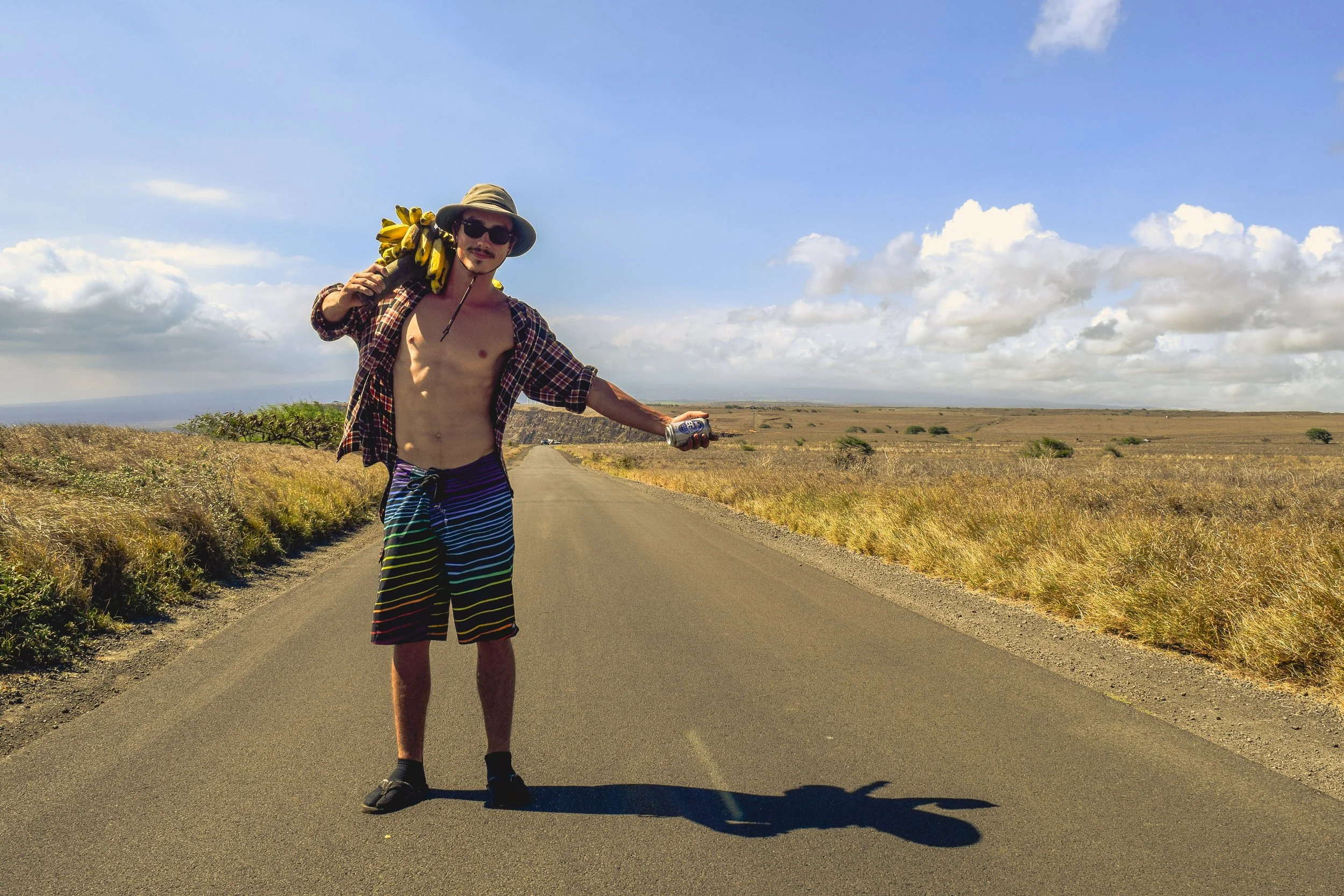
This is an interview with my great friend, Alex Chmiel, who began earning the nickname, "Yesman" two years ago when we met WWOOFing on a farm in Hawaii. Since, he's continued earning his nickname saying Yes to things from winning concert tickets from radio stations, to spontaneous hot air balloon rides, to college graduation speeches. He's about to set out on a five and a half month walk across the United States from Mexican to Canadian border through the mountains, so I was ecstatic for the opportunity to interview him about his relationship with the word Yes before he drops off the grid for a while.
The Mountain in the City
There once was a city with a big mountain in the middle. Hundreds, sometimes thousands of people climbed the mountain every day.
When the sun went down, though, a funny thing happened. The top of the mountain became the most beautiful place in the entire city, but nobody knew because nobody climbed the mountain in the dark.
People didn't climb the mountain in the dark for a couple of reasons. One reason was that everyone believed hiking was meant to be done in the daytime. The second was that the city decided it was too dangerous to climb mountains in the dark and would fine anyone caught a large sum of money.
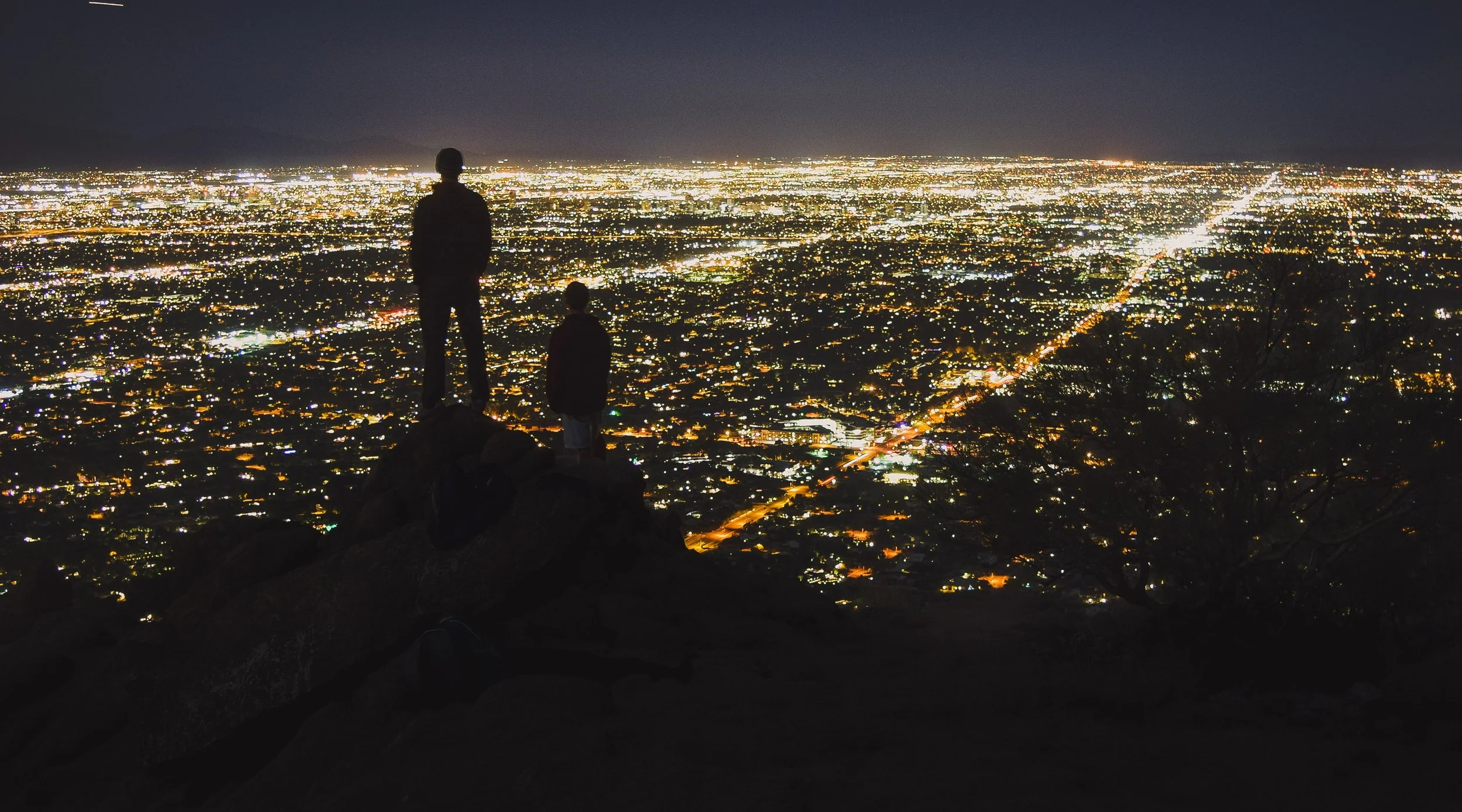
So when the sky got dark and the spectacular electric grid of the city turned on, stretching for miles and miles and miles in every direction from the top of that mountain, nobody climbed up to look.

Grabbing the Reins While on the Road
This article is a follow-up to last week's Letting Go While on the Road. Then, I was in the midst of an experimental road trip, aiming to just let go and drift without plans or control for a couple weeks. Near the end of the road trip, though, and after publishing last week's article, I blatantly broke the rules of my experiment.
To explain why, I have to back up to ten days before the incident to a conversation that planted the seed of dissent in my head.
It had been raining all day in Queenstown. In a packed campground kitchen, I sat down next to a guy I'd briefly talked with weeks before in a hostel in Greymouth and in striking up a conversation, quickly realized we were kindred spirits. A teacher and writer, Jeremy was in the midst of a backcountry exploration of the South Island on foot while documenting the journey through his website. A remarkable conversation ensued for a couple hours, most pertinently exposing one major difference in our approaches to travel. Both Jeremy and I held no rigid plans, but I had literally no knowledge of my surroundings while Jeremy was loaded with more information than any traveler I'd ever met.

Letting Go While on the Road
I'm two weeks into a road trip around the South Island of New Zealand. In my two months here leading up to it, I've been dedicated to reading, writing, and The Living Theory, but the past two weeks I've tried to do the total opposite—to just let go.
I'm naturally an organized, stick-to-the-plan kind of guy. But in the name of adventure and bending against my nature, I've let go of structure, plans, and literary ambitions for a bit. Not just for a break from a year-round focus on doing what I love, but to allow myself to drift in an unusual direction and see what I might discover. Instead of steering, I'm just enjoying the ride for a while.

Fragile. Sublime. Moments.
Maybe once a month, or even less frequently, I have these moments. Moments that last anywhere from five minutes to an hour. They're sublime moments—moments of elation, verging on ecstasy. Moments when I find myself utterly moved by my surroundings or by an experience.
I had one of these moments today.
Rain was falling all day and after spending one too many hours inside, I needed to escape. I grabbed headphones, pulled my rain coat on, and stepped out into the cool, heavy air of late afternoon. Grey clouds hung overhead and as the Interstellar Soundtrack eased into my ears, I walked west out of a small New Zealand town into farmland and pastures.

How to Do What's Most Important to You Every Single Day
I don't know anyone who thinks there's too much time in a day. It's rare that we accomplish everything we hoped to. We begin the day with great intentions but, come the end of it, finish with tasks we intended to but didn't reach.
The problem is that the tasks we don't get to are often the most important ones. We don't hesitate to begin what's urgent or easy, which often leads to putting off the more difficult and important things later in our day.
As a writer, my hardest task to accomplish is, paradoxically, writing. For me, writing is difficult, deliberate work. When I think about beginning, everything else on my "to-do list" becomes very attractive. I spent months relying on sheer discipline to write for The Living Theory, until eventually discovering something much more effective: eliminating less important ways I spend my time.

My 12 Favorite People and Websites on the Internet
If you were me a few years ago, this would be the best page on the internet you've ever landed on. It's a list of people and websites that have had the greatest impact on me, with links to the pages I've found most profound or taken the most from.
There's a lot here—if you're into it, bookmarking this page might be a good idea.
Without further ado, my 12 favorite people and websites on the internet:

Outbound
When you get away from it, it's easy to forget. And as long as you're away from it, you can never remember. But when you return—ah, when you return to it!—once again the truth is as clear as day and greets you as if you'd never left.
I landed in Christchurch, New Zealand last night. And I'm now sitting on a bus, winding through green valleys and rolling countryside dotted with countless sheep. After time away from nature, bathed in advertising, money, and status, such things tend to infect one's thoughts. Remarkably, though, I'm an hour into this bus ride and my compass has already realigned to true north. Take away the television, advertisements, and social proof of collective priorities held by those with constant exposure to such an environment and replace them with lush green, fresh air, and places that beckon to be explored, and the mental poisons of a consumer society quickly denature.

How to Feel More Alive and Less Numb
Life is full of paradoxes. One of them is that only when we don't have something do we truly appreciate its value.
A few examples:
- When we’re sick, just being healthy is a cause for joy.
- Only when we lose someone do we fully understand how much they meant to us.
- If we sleep on the ground for a week, returning to bed is like floating on a cloud.
The absence of something reveals its value. And the opposite is also true: having something causes us to lose sight of its value. Following this train of thought, if we have everything all the time, then we can appreciate nothing. And contrarily, if we have nothing, then we can appreciate everything.

2016 in Review
This is my second annual review, a sort of yearly glance at the map to better understand where I've been and where I'm going. Looking back at last year's review, it seems I hit seven of the eleven goals I set for 2016, which I'm quite happy about. If I'd fulfilled all of them, I think that would mean the bar was set too low.
This post is a bit more of a plot summary of my life, rather than lessons or ideas taken from it that I usually share. However, I tend to enjoy a bit of background information on who writes the things I read. If you do too, read on.
In Memory of an Astronaut
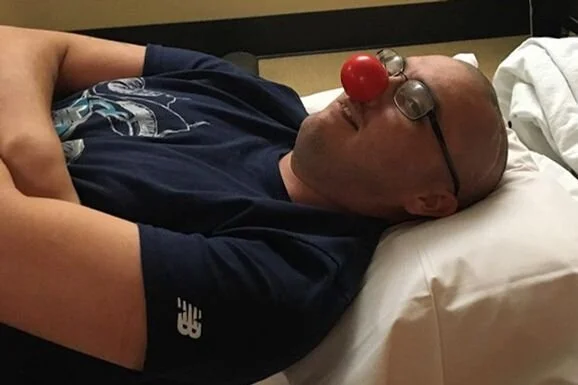
I met Steve “Boomer” Santistevan because, like him, my life was saved by the staff of Phoenix Children's Hospital. I had an infection of the fluid surrounding my brain and spine, causing a brain-damaging stroke. Boomer had a brain tumor that was supposed to be the end of him. Yet, there we were—still breathing and more alive than ever before. We were the embodiment of the best possible outcomes of our afflictions. I woke up from a coma and made a full recovery. Boomer defied death, miraculously navigating the narrowest path of survival through dozens of brain surgeries.
Hanging onto the fringes of life and peering over the edge changed us. For us both, life was no longer a struggle, but a gift. We knew there was no such thing as the "daily grind." Every day was a miracle. And anyone who might disagree just didn't understand.
We also found purpose in giving back to the non-profit children's hospital that saved our lives. I chose to ride a bicycle across the United States as a fundraiser. Boomer ran marathons, walked, and participated yearly in the Ignite Hope Candlelight Walk at the hospital, a moving experience I regret not sharing with him.

With Each Stroke of the Paddle
We all have goals, ambitions, and dreams we'd like to reach in life. We think about them often. We imagine ourselves as masters of this or creators of that. But how often are we just dreaming instead of doing?
I was paddling around in a kayak the other day and realized kayaking is the perfect metaphor for our ambitions in life. In a kayak, paddling is everything. If you want to go somewhere, you have to paddle to get there. Without consistent strokes of the paddle in the direction you want to go, you're merely drifting at the mercy of your environment. You'll never get to where you intend to.
In a kayak, wishful thoughts of your destination might keep you going, but will not get you any closer. The stroke of the paddle is all that counts. Life works the same way. If you know you want to go in a certain direction, master a skill, or pursue anything, it takes consistent, deliberate action.
We're Not Beginning at the Beginning
We began in the middle of the story. Though our beginning may seem like the beginning, it wasn't. We tend to think with storyboards that span the length of our lives—birth to death, beginning to end. Such a storyboard is a bit small, though. Much happened before we arrived and much will happen after our departure.
In regarding the start of our lives as the beginning of all that composes them, we overlook what has come before us and tend to forget that what came before is—get this—almost entirely responsible for our reality today.
It's not just inventions and material advancements of the past that built the physical reality we were born into. It's all the ideas conceived in the past, from democracy to evolution to economics. Logic itself was birthed by the Greeks and handed down through time to us. The language we were taught and the words contained within it allow us to express ourselves but also limit our self-expression to the words those of the past made available to us. Human behavior, expectations, our interpretation of reality... almost everything we know and do stems from those who came before us.

In the History of Humanity Traveling Has Never Been So Easy
I'm jet-lagged and have to run to catch a bus across the south island of New Zealand soon, but I want to pin down a beautiful thought that's been bouncing around my head the past couple days.
In the history of humanity, traveling has never been so damn easy. Think about it: you could be almost anywhere on the face of the earth in a matter of a day or two. This weekend, you could snorkel the Great Barrier Reef, walk the Great Wall of China, or drink a Guinness in Ireland.
This might seem normal to us, as we were born with this privilege, but looking from a larger perspective, it couldn't be further from usual. For hundreds of thousands of years, we humans could only travel as fast as we could walk. Eventually, we figured out how to tame and ride animals that were faster than us, which sped things up a bit. We built ships, and bold explorers crossed uncharted oceans with wind power. However, nothing comes remotely close to the ability to travel we have today.

An Exercise in Overwhelming Possibility
This is not an article, it's an experiment. It takes about ten minutes. It will make you think about how narrow-minded we all normally are and will leave you with a profound, overwhelming sense of possibility.
Interested? Grab headphones, a pen, and a blank piece of paper. Not grabbing said ingredients? Don't bother reading on.
You Have To Find Your Own Pot of Gold
Nobody can hand you your pot of gold. There is no magic pill, no trump card we can play in life that wins every time.
Every once in a while, I pick up on a certain dissatisfaction in readers, readers of this site and other sites that I read. They're dissatisfied because they want the answer, not a way to go about finding it. In their search, they encounter ideas, strategies, and guidance, but all they want is the end product. The solution to their predicament without the work. No matter where they search, nobody seems to be offering it.
On such a quest we may look to carbon copy others' successes, only to find that what worked for someone else doesn't work for us. Unlike Steve Jobs, it's no longer the 1970's, and we're not friends with a Steve Wozniak who's building an electronic device that could revolutionize the world. Unlike Tim Ferriss, we don't have a bestselling author like Jack Canfield to advise us in writing and promoting our first book. I've been told that I'm lucky to have almost died at sixteen years old because it gave me such a powerful story for my cross-country bicycling fundraiser.

Leaky Bucket Economics
People often ask me how I afford to travel so much. Where do I find the time? How do I make enough money?
It's all actually quite simple. I think anyone could replicate what I do. I did my best to explain in "GO." my guide to cheap, unconventional travel, but I want to elaborate on one of the most important, yet often overlooked concepts I live by that allow such freedom. I call it leaky bucket economics.
I literally think of my personal finances as a leaky bucket. Each one of us has a bucket. The money we earn flows into our bucket. The money we spend leaks out. If someone makes $30,000 in a year and is able to save $20,000, they've got one well-patched bucket. In contrast, if someone makes $100,000 a year and spends it all, their bucket has no bottom.
The goal of leaky bucket economics is simple: to patch our inevitably leaky buckets as best as we can. Without money flowing in, we want our buckets to be able to last months, years even, before running empty. Think of it as a sort of financial miles per gallon. On our journey through life, we should strive for a personal finance system with the efficiency of a Prius, not a F-350 Super Duty.
A Letter from Hunter S. Thompson on Choice and Meaning
At the age of 20, Hunter S. Thompson wrote a friend in response to a request for life advice. While rejecting the idea that one can tell another specifically what to do with their life, Thompson's general guidelines for deciding how to answer such a monumental question for ourselves are remarkably profound and useful.
The Time I Was Caught Sleeping In My Car and Some Thoughts on Cultural Pressure
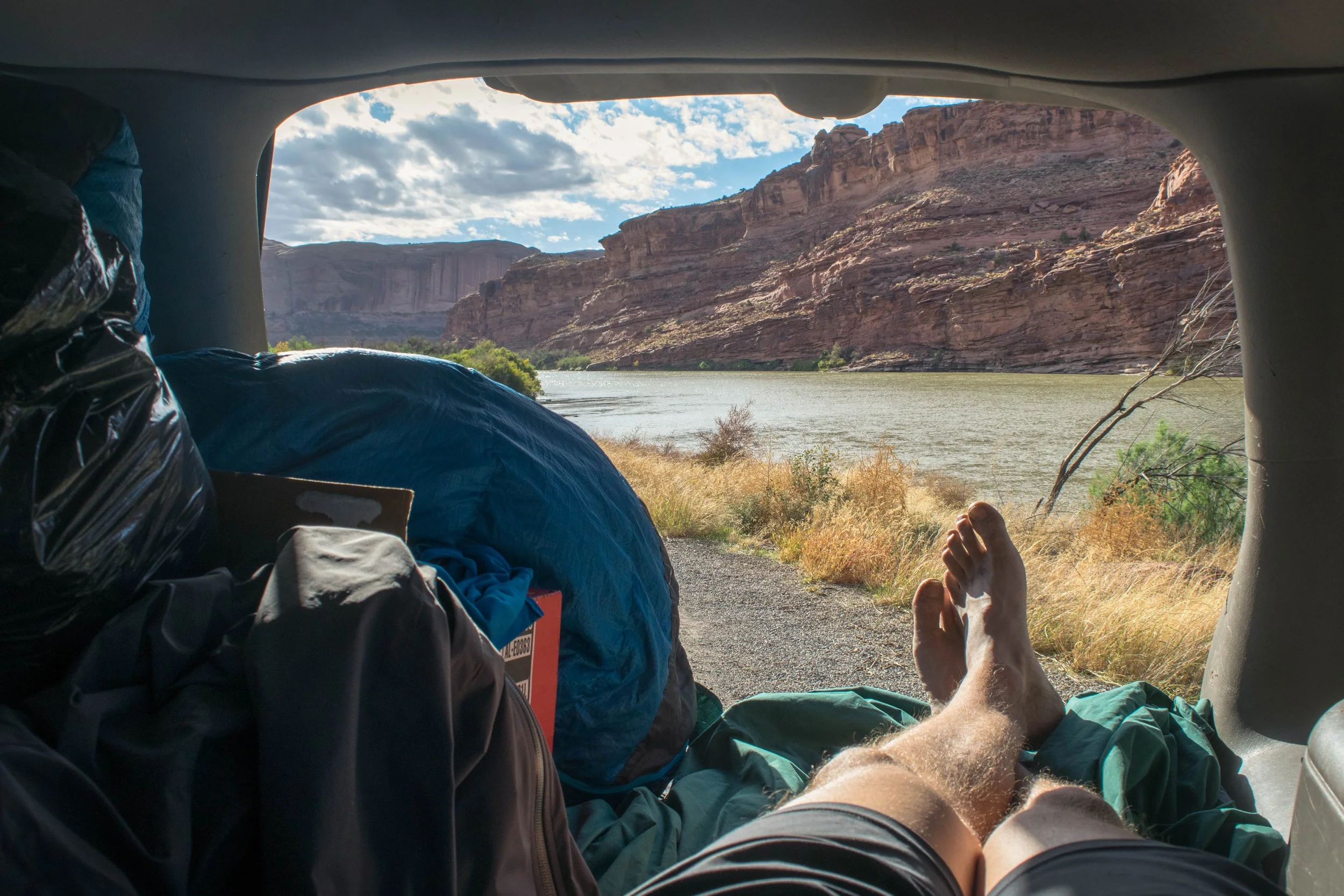
It's nighttime in an upper-middle class suburb near downtown Denver, Colorado. Streetlights cast a warm light across the neighborhood revealing the faint orange of fall leaves on the trees and road. Quaint old brick homes built right up against each other line the streets with cars of the affluent parked bumper to bumper outside them.
Amidst these luxury vehicles, I'm sitting in the passenger seat of my cheap, old Durango, gathering up the ingredients to make a peanut butter and jelly sandwich with my headlamp. It turns out I left my backpacking spork in the back, which is essential for spreading the peanut butter and jelly, so I open the passenger side door to retrieve it. Opening the door turns on the interior lights of the car, illuminating my bed and many possessions piled up in the back.
With impeccable timing, an older, upper-middle class couple walks by just as I light up my car's interior, exposing my neighborly camping intentions just as I pop out of the car to face them.